
Sarah Bahr Brings a New DORIAN GRAY To Life
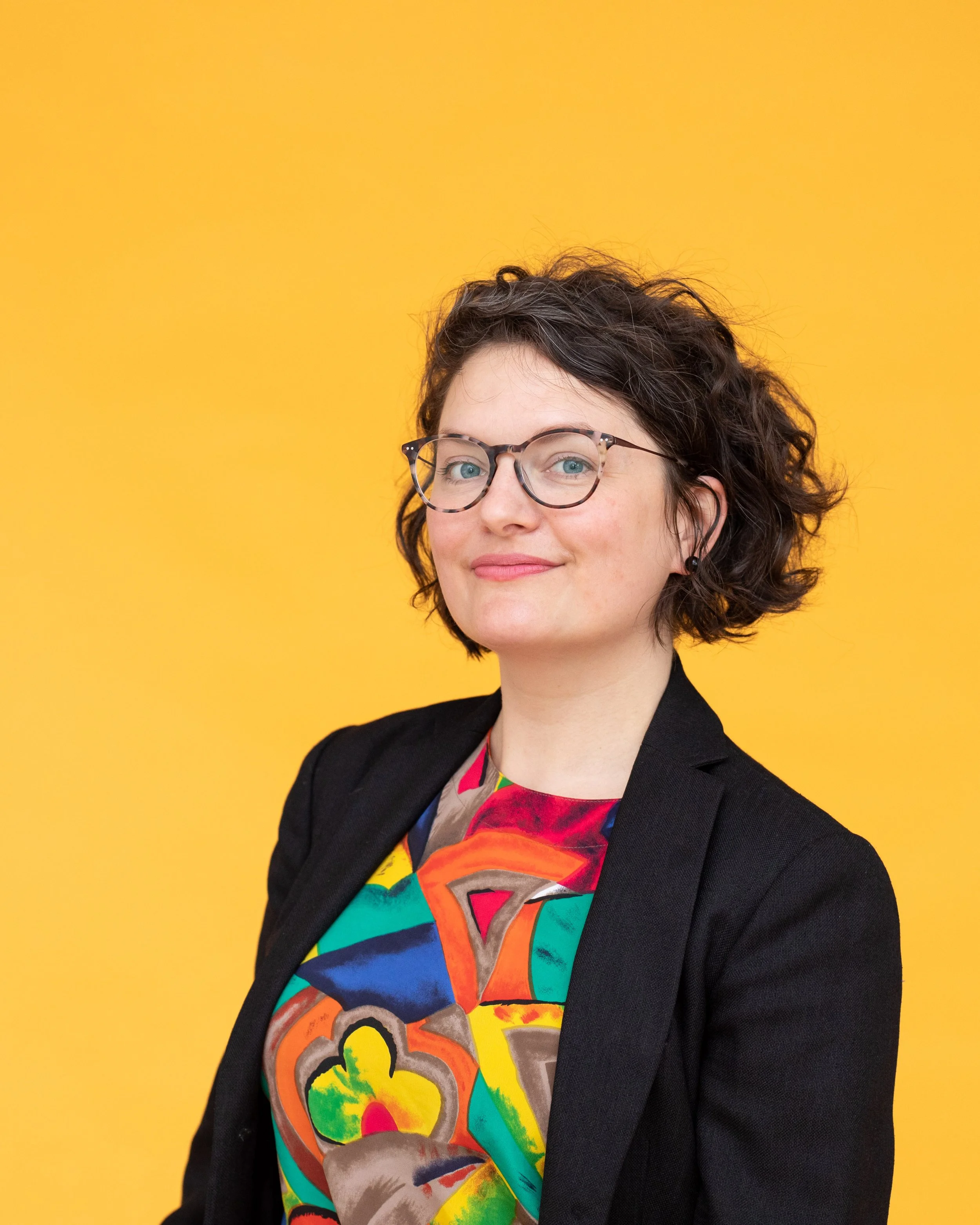
It’s not hard to spot a Sarah Bahr show in the wild.
She’s an expert at making onstage spaces feel evocative, layered, and lived in. As a Twin Cities-based costumer and set designer, she’s the unseen artist behind some of your favorite shows.
So, when it came to a show that was going to be as technically challenging as THE PICTURE OF DORIAN GRAY, we knew that there was only one person that we could trust to bring the vision to life.
A Perfect Match
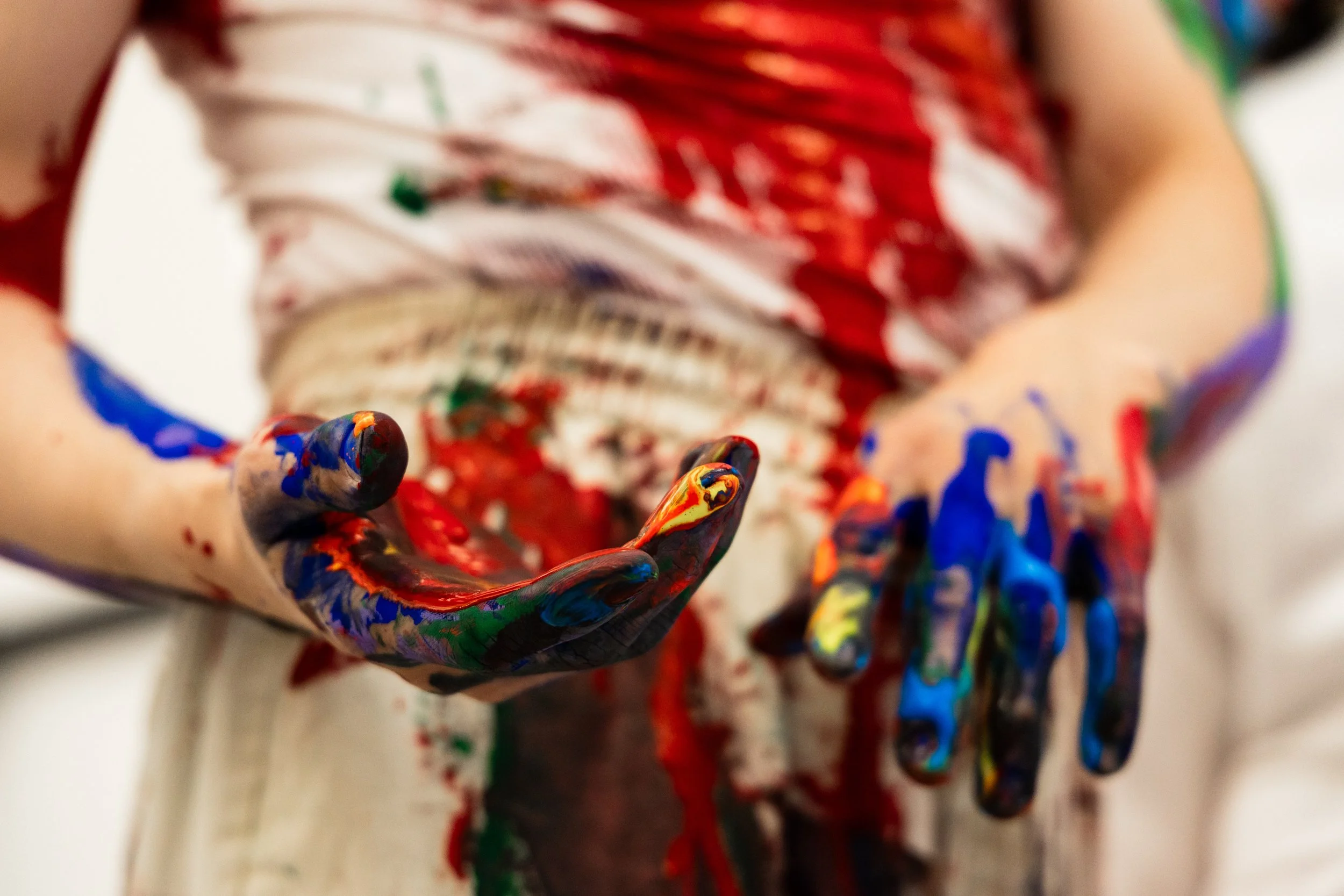
2025’s private workshop of THE PICTURE OF DORIAN GRAY
When Artistic Director Tyler Michaels King, came up with the idea to adapt Oscar Wilde’s only novel, he knew that he wanted to create something more dynamic than your standard period drama.
This, he realized, was a story about influence and corruption. And what better way to show that than with actual live painting, staining the skin and clothes of the actors onstage?
Of course, it’s one thing to dream an idea like this up. It’s another to execute it.
As a frequent Trademark collaborator and multi-media artist, reaching out to Bahr was a no-brainer. But, like much of Trademark’s work, they knew that figuring out how to bring live painting to the stage was going to be a long process, filled with trial and error.
Theater In Living Color
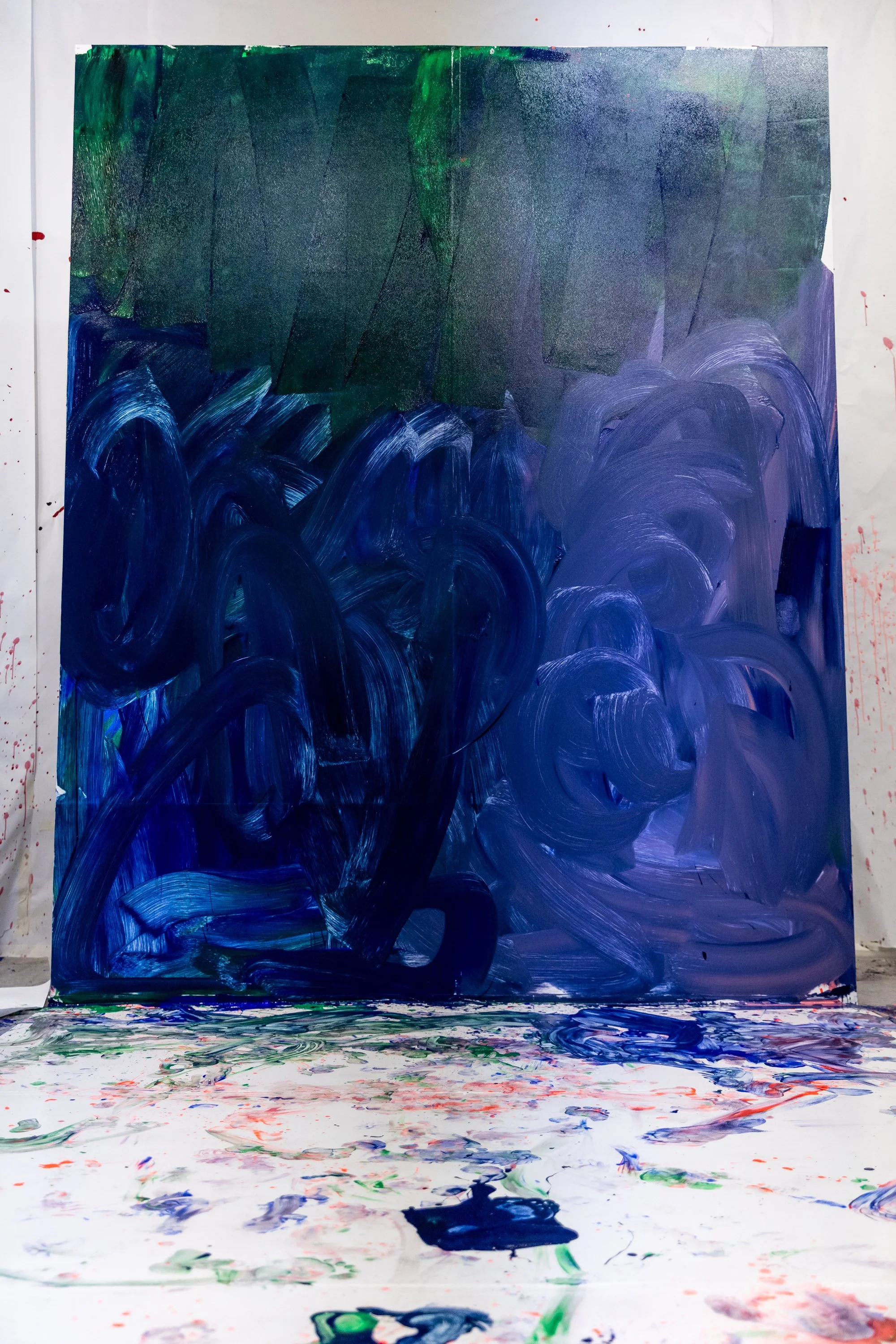
Image from 2025’s private workshop
In May of 2025, Bahr, Michaels King, and a small group of performers began a week long private workshop. Together, they tested different paint formulas on different materials, how it can be used in movement, and what color combinations worked together.
This September, you’ll see the culmination of that work in our workshop presentation of THE PICTURE OF DORIAN GRAY, featuring scenes from Michaels King’s script, as well as live painting spearheaded by Bahr.
As the team prepares to head into rehearsals, we sat down with Bahr to learn more about her artistic process, what to expect from the workshop, and why trial and error is vital for artists.
Q&A With Sarah Bahr
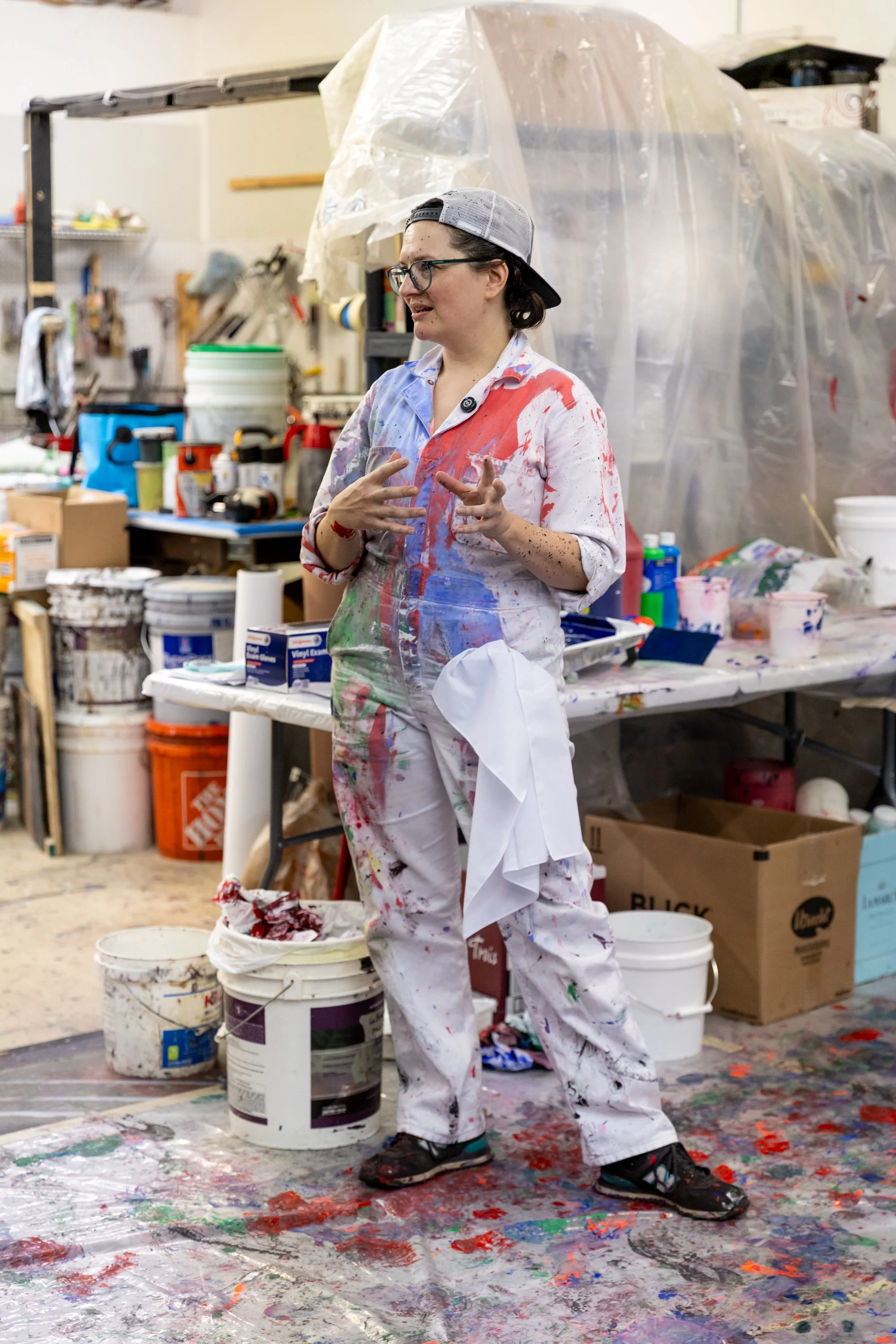
Bahr, talking through the painting process during 2025’s workshop.
Q: Tell us a little bit about your background and how you got involved with the process of creating this show.
A: I am a Minneapolis-based costume and scenic designer. I first started working with Tyler and Trademark Theater in 2018, when I designed costumes for their inaugural production - ‘The Boy and Robin Hood.’
Since then, I have designed the costumes for all of Trademark’s fully-produced plays, designed both costumes and set for ‘The Reunion,’ and was the wardrobe supervisor on the short film ‘What You Can’t Keep Part 3.’ Tyler and I quickly became close collaborators, also working together at Theater Latte Da and Artistry.
We’ve grown together as artists and have created some fantastic work that I am immensely proud of. When Tyler reached out to me to collaborate on the development of ‘Dorian Gray’ I was instantly on board.
Q: What drew you to the idea of adapting DORIAN GRAY for the stage?
A: I was drawn to Tyler’s clear vision for the production: white wall, white floor, white costumes, and lots of colorful paint added throughout the story. It sounded perfectly experimental, modern, and something I’ve never seen before. He wanted to approach the process focusing on the design first and let that influence how he adapted the novel into a script. This is the opposite of how I usually work; I usually get a finished script and design for what is on the page. It was a refreshing and exciting challenge to start with a design first and work alongside Tyler every step of the way.
Q: The live painting aspect of this show has been years in the making. Could you tell us a bit about how that process evolved, and what you're hoping to discover in the upcoming workshop?
A: May of 2025 we had our first week-long workshop where we experimented with tempera paint, small canvases, t-shirts, and a wall covered in white paper to determine if this was even an interesting and viable approach. We left that workshop feeling really confident that it was, and it gave Tyler a lot of inspiration as he continued working on the script.
Then in June 2025, we went bigger and built a wood wall and floor, brought in 3 dancers, and started to walk through key moments of the story with movement and paint. This gave us even more validation that we had something really exciting, but also left us with a lot of questions to make this logistically viable.
Our biggest question was how to restore back to a white world after each performance. This summer we tested different types of tempera paints, different paint treatments for the wall and floor, and different fabrics and treatments to gauge what is easiest to clean. We worked with our Techical Director Zeb Hults and paint consultant Angelique Powers to help dream up options and solutions as we prepared for this workshop. Our goal is to see what it takes to do a big clean-up and changeover after a performance where everything getting covered in tempera paint.
Q: What excites/inspires you about being part of the process of creating new work?
A: The opportunity to be the first person to conceive and create a new visual world is thrilling. Developing something new demands a level of collaboration that creates stronger artistic bonds between artists and allows us to contribute outside of our specific area of expertise to achieve a common goal.
Q: A lot of people don't have experience with the time, trial, and error that goes into creating a new piece of art. Tell us a little about your individual process, and how having multiple workshop experiences has shaped this piece for you.
A: Spending more time on a project makes it more meaningful and personal. I can balance focusing on ‘Dorian Gray’ and then taking a break while working on other projects, but it’s always lingering in the back of my mind and when inspiration strikes, I can dive back in.
I take a lot of pride in what we set out to do and what we have accomplished. We are definitely being ambitious and pushing boundaries.
This is not a typical theatre production and the experience the audience will gain I believe will be on par with going to an art gallery or museum to see live performance art. I have a background in fiber art and sculpture, so this prolonged process grounded in experimentation has brought me back to my studio art days where I would spend days in the studio experimenting with materials, form, and presentation.
Q: If you had three words to describe DORIAN GRAY to audiences, what would you choose?
A: Invigorating, Visceral, Stunning!