
Q&A With THE PICTURE OF DORIAN GRAY Adaptor and Director Tyler Michaels King
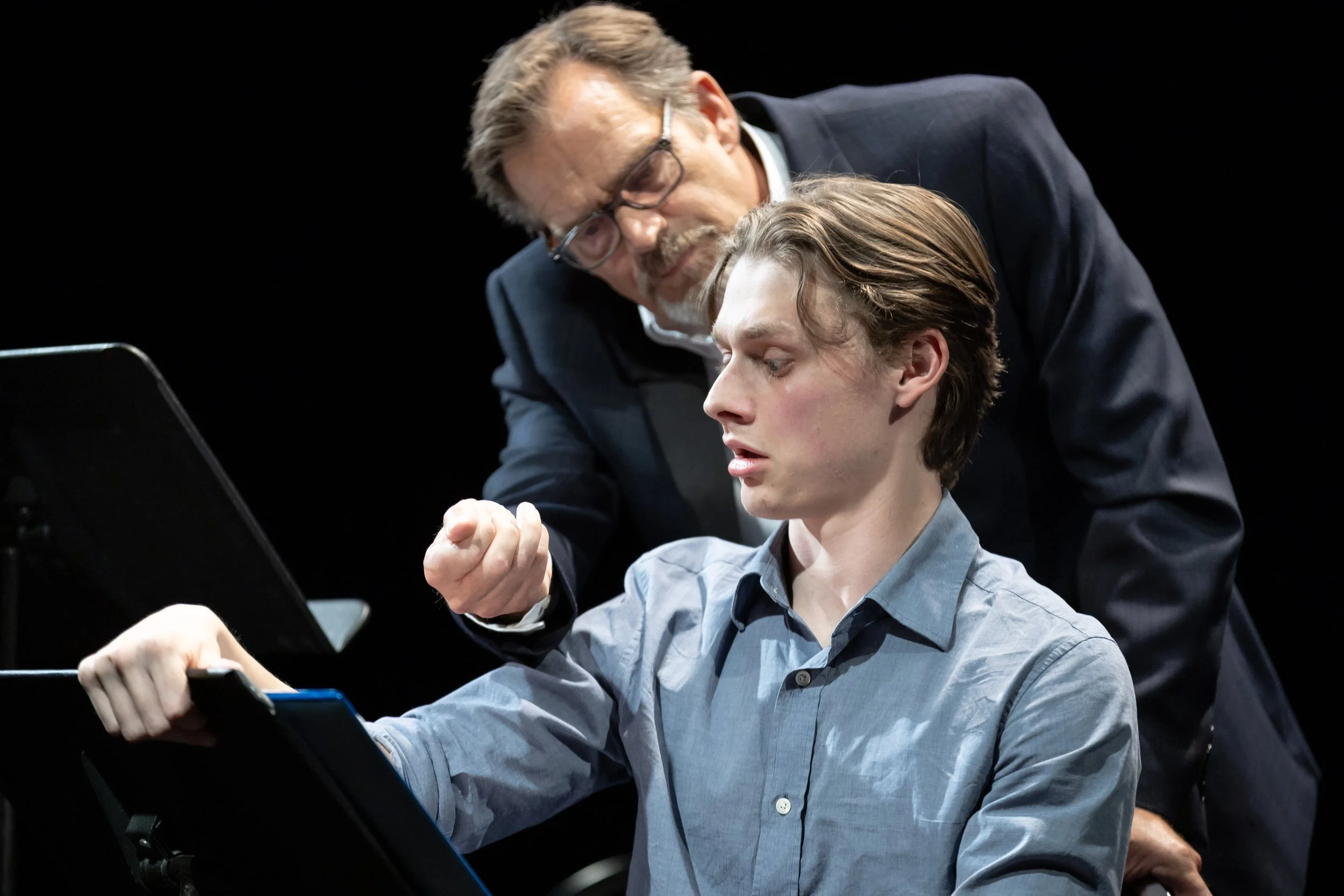
Mark Benninghofen and Robert Wood Frank, IN THE WORKS Showcase reading, 2024. Credit: Studio Aura
Artistic Director and founder Tyler Michaels King is no stranger to the new play development process.
Working as Director, Conceiver, Writer, or Producer on past projects at Trademark have prepared him from his work on The Picture of Dorian Gray— his first solo adapting venture at the company. But unlike past projects, Dorian Gray found him working with a source material that wasn’t just known. It was beloved, by many.
That meant that the stakes were high, when it came to creating a piece that was recognizable, true to the source material, and yet still applicable to a modern audience.
A Two Year Process
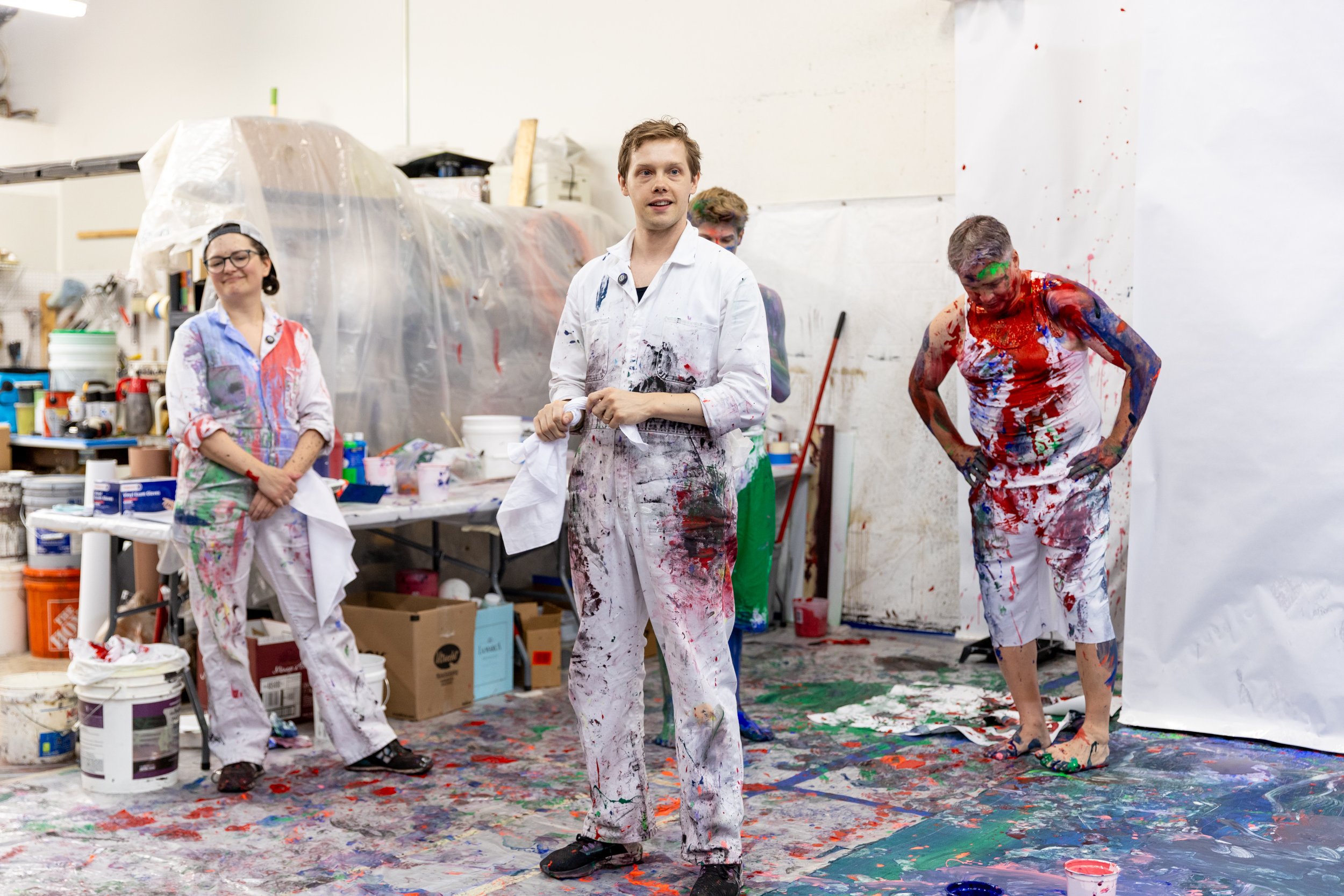
McKnight Theater Artist Fellowship Workshop, May 2025. Credit Studio Aura.
While Michaels King is the founder and directs the majority of Trademark’s productions, he doesn’t make exceptions for himself. He’d seen firsthand the benefits of Trademark’s thorough (and sometimes lengthy) development process, and wanted to give Dorian the time to find it’s footing.
The Picture of Dorian Gray was commissioned by the Trademark team in 2024, and debuted as part of our Season Eight “In The Works” showcase. Since then, the play has grown in scope, with a special workshop funded by Michaels King’s McKnight Theater Artist Fellowship to help refine the technical elements of the play with production collaborator Sarah Bahr.
Now, in January, the piece is ready for it’s next step in the development process: a week of in-depth workshopping with a cast and creative team, culminating in a one-night-only staged reading on January 26th.
TMK On Adapting, Directing, & Connecting With Audiences

Rehearsals are just a few weeks away! But before we settle into the rehearsal room, we sat down with Tyler Michaels King to learn more about his vision for a modern Dorian Gray.
Q: What inspired you to adapt "Dorian Gray?”
TMK: I love the gothic, soft-core horror elements of the story, and how, without directly referencing the horrors Dorian commits, one can so easily see themselves in the character, really all of the characters. More than anything though, the final image of the novel (no spoilers!) has always captured my imagination.
Q: What has the writing process been like for you?
TMK: Long! I’ve realized through this process I like to take my time and really gestate on ideas, themes, even individual lines of dialogue. I’ve also enjoyed having Oscar Wilde as a silent writing partner— trying to figure out what his intention was, how it matches or conflicts with my interests, and how the two can elevate one another.
Q: The book was originally published in 1890. What do you think makes this story relevant to audiences today?
TMK: It’s the novel’s exploration of influence and corruption. Both how easy it could be for any of us to be wooed into a sense of privilege and/or power and how both can so easily lead to harming others. How that corruption spreads and poisons. We see that starkly in our world today. We can see how those in positions of power become so easily corrupted by the influence of others. I am fascinated by the internal conflict of that kind of corruption.
Q: What are the biggest challenges in adapting a book for the stage?
TMK: The hardest part is distilling a 300 page novel down to 2ish hours and still having an impactful story. Oscar Wilde’s language in particular is so enchanting and witty, but he might use two or three pages of narration to explore the internal machinations of a character. With such an internal story as Dorian’s, picking out the gems from so much text in order to capture the evolution of his thoughts can be daunting. There is also the challenge of not having the benefit of narration in the play (at least in the way I’ve chosen to adapt it). So it’s figuring out how to get into the mind of Dorian when he is alone and confronting himself without dipping into cliche soliloquy. Hopefully I’ve done enough to track his journey.
Q: What do you think is the benefit for artists and audience members participating in Trademark's workshop & reading process?
TMK: There is nothing more exciting to be a part of something that is still forming and to see how the artists bring it fully to life two or three years later. It really illuminates the real labor that artists commit their lives to; the profound, challenging, inspiring work of service they provide to our community. It also brings you closer to the artists themselves. You really get to understand who they are, what makes them tick, what inspired them to tell their stories. Also, with how we’ve structured our readings, you get to be an actual integral part of the creation of the story. You get to offer your thoughts, your reactions, your feedback (completely voluntary of course). When we actively participate in the making together, as artists and audiences… All of these things generate a deeper sense of community with others.
Q: As the writer and the director of this piece, how do you balance the two roles?
TMK: I think this is part of why I take so long as writer; I want to have as solid of a foundation with the script as possible so that I have the mental space to direct the actors towards great performances. As Playwright, I’m hopefully supplying the team with really clear blueprint. From there, it's all about how this particular group interprets the blueprint and how it needs to change for them. Actors will bring their own insights and perspectives which will influence the text. The process becomes a wonderful collaboration between writing, direction, and action. And, as the Director, I’m hopefully guiding it down an effective and common path for everyone on the team.
Q: What are some pieces of art that have inspired you, lately?
TMK: Completely out of context from Dorian Gray — though I believe any art I take in can influence, challenge or inspire what I might be working on — I’ve been obsessed with Pluribus on Apple TV. Vince Gilligan is one of my favorite film/TV directors— each frame he crafts is a painting on screen. (Painting… I guess it did influence me!) His writing and characters are some of the most complex and captivating in television today.
Tickets Are Onsale Now!
The Picture of Dorian Gray will be performed as a staged reading on January 26 at 7:00 at Mixed Blood Theatre. Tickets are selling fast, so be sure to secure yours today!